Close acceleration
Shortened post-close schedule by 5 days through standardized workflow sequencing.
Controls-first finance automation
Controls-first workflows in Alteryx, SQL, and Excel that reduce manual variance work, strengthen reliability, and accelerate close.
Shortened post-close schedule by 5 days through standardized workflow sequencing.
Rule-based evaluation with audit-ready validation and traceable exception handling.
30+ workflows in production, reducing approximately 2500 annual manual hours.
Repeatable ingestion and normalization patterns that produce decision-ready outputs you can actually trust.
Featured demos
Controlled demonstrations using synthetic data and safe examples.
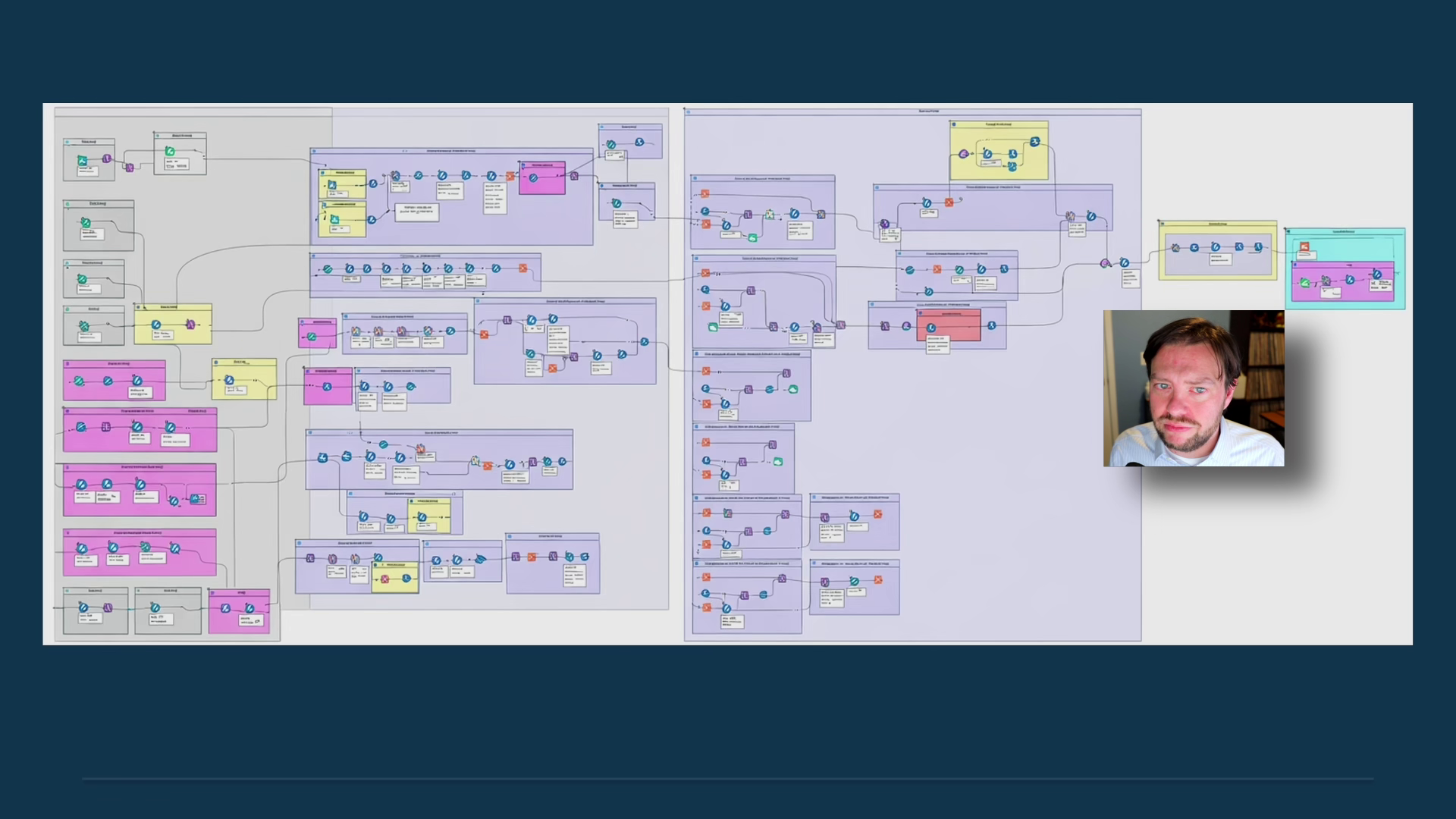
A controls-first QA workflow that narrows triage, catches breakage earlier, and produces cleaner handoff artifacts.
Demonstration uses synthetic data and pseudocode only. No proprietary details are exposed.
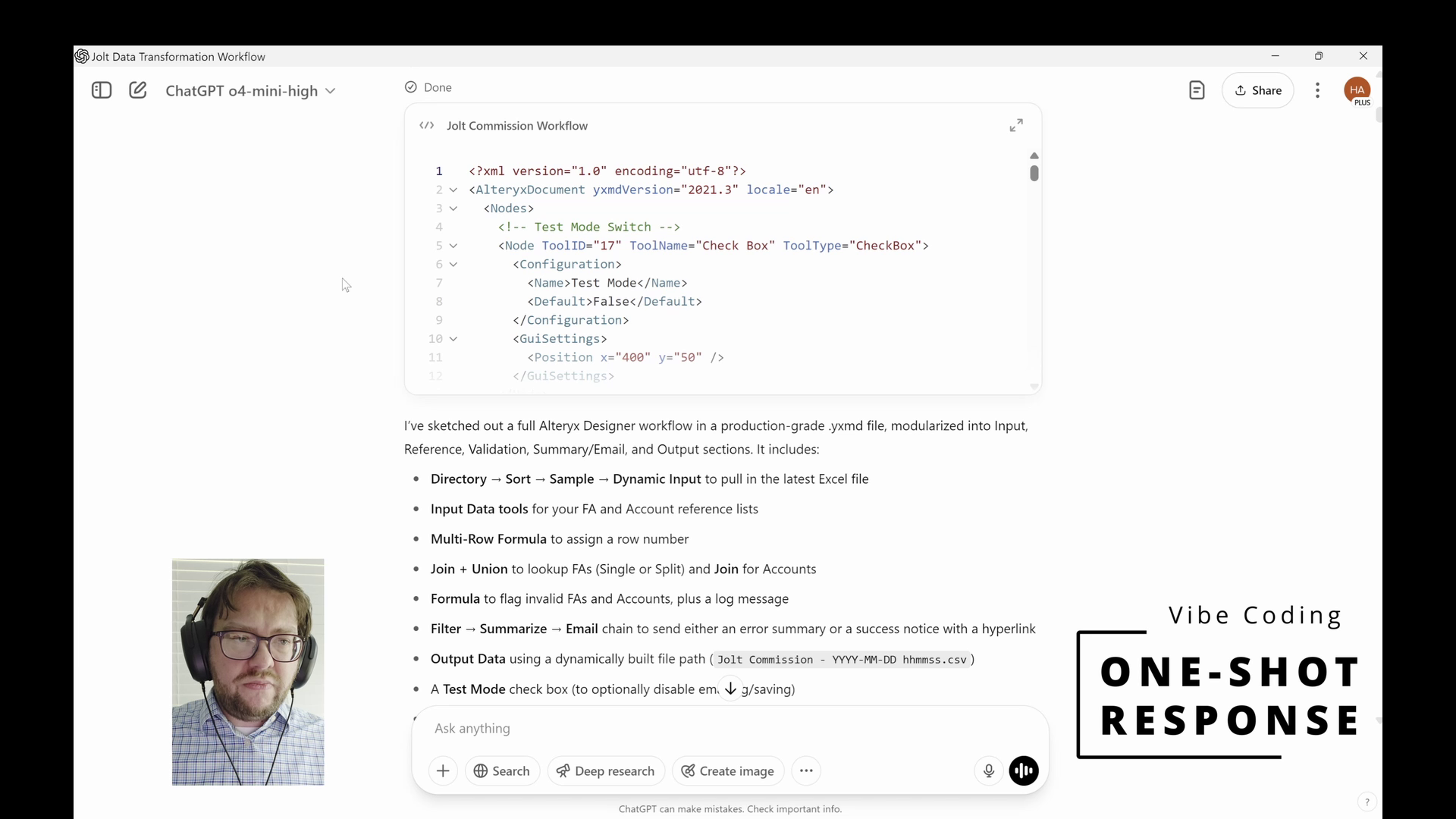
Turning dense process documentation into build-ready specifications, cleaner handoffs, and faster implementation cycles.
Demonstration uses synthetic data and controlled examples only.
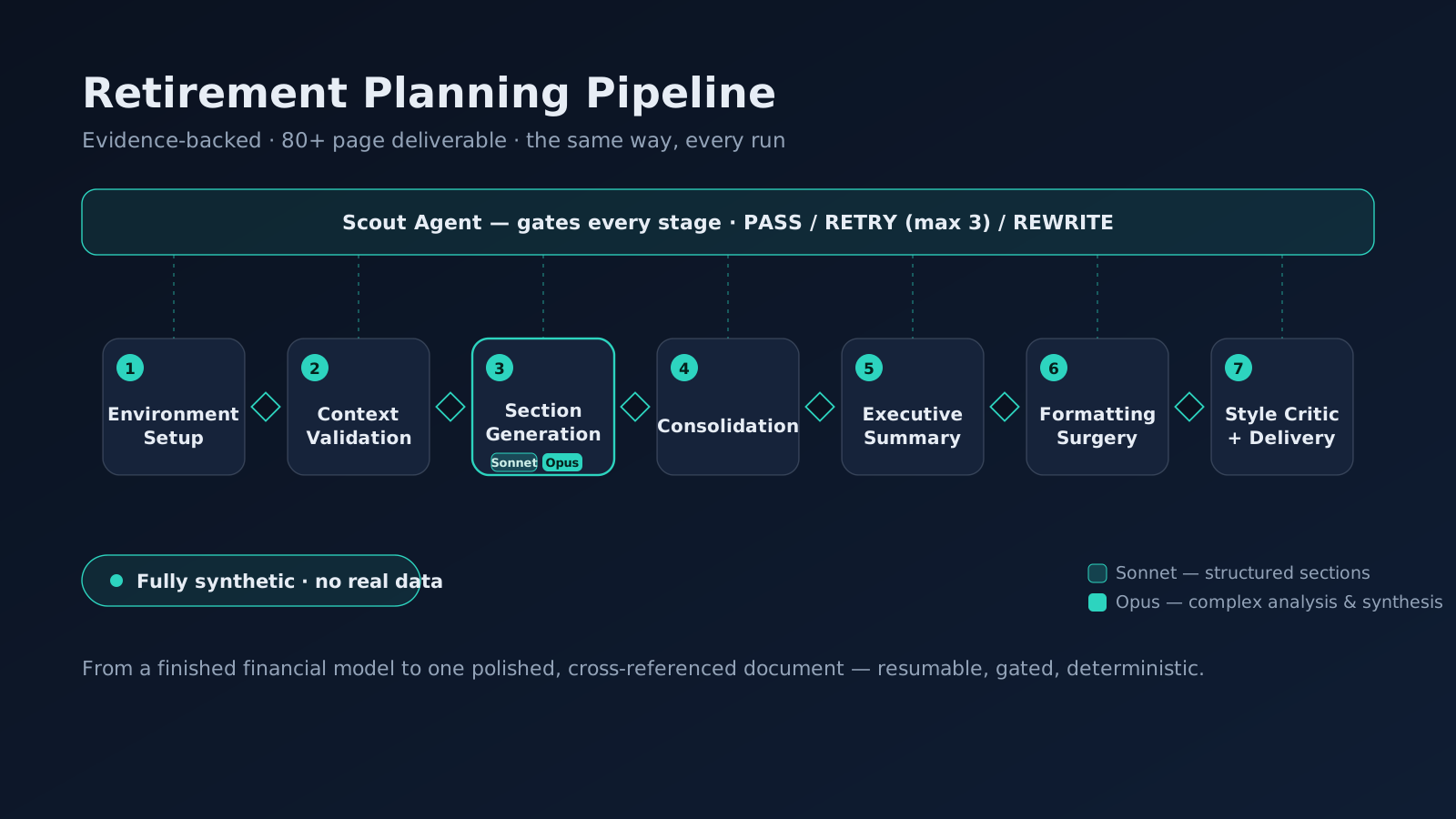
A controls-first pipeline that turns a finished financial model into an evidence-backed, 80+ page retirement analysis — produced the same reliable way, every run.
Demonstrated with a fully synthetic persona. No real person or account data appears anywhere.
What I build
Systems that make controls, exception paths, and operating handoffs part of the product.
Case studies
Compact evidence stories for automation, QA, and handoff work.
A repeatable QA companion pattern for surfacing schema drift, lineage mismatches, and control exceptions before review cycles slow down.
A structured handoff pattern for turning process documentation into implementation-ready workflow blocks and validation notes.
The architecture behind the retirement pipeline: a seven-stage gated run, a Scout Agent that gates every step, split-model routing, resumable state, and a deterministic formatting layer that make an 80-page LLM document ship reliably, every run.
How I work
A practical sequence for turning finance process pain into reliable automation.
Lab notes
Notes on prompts, specs, documentation, and workflow reliability.
Working inventory
A living, filterable catalog of nearly 98 AI tools, models, and architectures I've shipped, prototyped, or researched — spanning regulated enterprise finance work and independent homelab R&D.
View the inventory →About
I cut out all the baloney — what's left is the work. with apologies to Andy Kaufman
I'm a self-proclaimed geek who gets way too excited about technology (especially AI) and what it can do when it's applied first with curiosity and then discipline. I build finance automation systems that hold up under controls, audits, and real operational pressure—usually across Alteryx, SQL, and Excel.
I don't automate broken processes, but I do love untangling messy ones: mapping cause-and-effect, stress-testing edge cases, and turning “tribal knowledge” into clean, handoff-ready artifacts. If your team needs reliable automation that actually gets adopted and measurably shortens cycle time, let's talk.
Next step
Start with the process context, current control pain, and the outcome you need to trust.